Wednesday, May 29, 2019

Unit 9: Space + Art

Week 9: Space + Art

Image result for cool pictures of space
Space looking pretty cool!
Space...a very relevant term that is accepted by humanity, but simply has a deeper meaning than ever expected. Space, in regards to Outer Space, can be defined in the dictionary as "the physical universe beyond the earth's atmosphere." But, how are individuals able to truly understand life beyond earth without the use of their unrestricted imagination? They simply can't.

Image result for edwin hubble's telescope named after him
Telescope named after Hubble!!
It all began with Edwin Hubble, who neglected to just sit back and watch society attempt to discover life beyond earth. So, this educated and intelligent man decided to implement his knowledge and imagination through the use of creativity, or art, in order to discover the truths behind the world outside of earth. But, this is where art becomes a necessity. Without Hubble's spontaneous and free-willed creativity, he would not have been able to even imagine what could possibly exist in the so-called "Outer Space." And, this form of imagination intertwined with creativity is art in itself.

Image result for paintings of space
Most popular Van Gogh painting that incorporates space!
So...the findings of Hubble provided the basis for the Cosmos and led to further discoveries. In fact, the first space telescope was even named after him. These developments of telescopes, rockets, tracking devices, and even space robots are all forms of art. Then, in fact, these visions of rockets, telescopes, or technological devices in space have even been transferred back to earth through the use of paintings or photography. Without the creative thinking and imaginations of individuals to put their thoughts into action, science would not be where it is today. In addition, all of these technological advances that continue to further our understanding of Space is all due to art itself. Every object, whether small or large, is a form of art that continues to enhance the minds of society, and help the world -- on or off of earth -- become more successful.

Resources

7-themes.com. “Cool Space Pictures.” На Главную. 

“Edwin Hubble: The Man Who Discovered the Cosmos.” European Space Agency.

“Outer Space.” Dictionary.com, Dictionary.com.

Upton, Emily, and Emily Upton. “Why Hubble Has a Telescope Named After Him.” Gizmodo
         Gizmodo, 4 Feb. 2014.

“Which Stars Were Depicted in Van Gogh's ‘Starry Night’?” Farmers' Almanac, 12 Feb. 2019.


Saturday, May 25, 2019

Unit 8: NanoTech + Art

Week 8: NanoTech + Art

Image result for nanotechnology and art
Small things having a BIG impact!!
Originally, I did not have a clue what NanoTech referred to or dealt with in regards to the sciences. But, after some research, I have found that the following definition of Nanotechnology helps me further understand its meaning: Nanotechnology is the study and application of the very small things, and can be used across all the other science fields, such as chemistry, biology, physics, materials science, and engineering. So...what if Nanotechnology had a critical affect on art? What if art did not necessarily have to be seen in order to have similar impacts that visual art contains? 
Image result for our five senses
All senses are just as important!!
Typically, art involves the judgment of viewers through the visual field. However, Nanotechnology, involving extremely small objects, has put this more common viewing of art to the test. Now, other sensory details are utilized in order to further understand the art being displayed throughout Nanotechnology -- senses such as touch, sound and possibly even smells. 
Image result for boo chapple's bone
Boo Chapple's bone creation! 
In fact, Boo Chapple has decided to test the relationship between Nanotechnology and art through creating audio out of bone. Basically, Chapple has to develop a vibration throughout the bone matrix in order to create sound or audio. To me, this is a perfect example of Nanotech and art intertwined - because, Chapple is not making a visually pleasing piece of art. But, instead, captures the attention of the viewers through illustrating the power of hearing. Simply put, Chapple demonstrates how art can be beautiful even without seeing. Sometimes art just needs to be heard and left for interpretation by the unique minds of every individual, rather than just being seen. 

Resources 
“Big Science, Small Miracles.” UCLA Magazine, magazine.ucla.edu/features/nanotechnology/.
Editor. “Editor.” The Art Treehouse.
“John Curtin Gallery.” Art.Base.
“Realtime 96.” RealTime Arts - Magazine - Issue 96 - Envisaging the Unseeable.
“The Five Senses Five Senses Song My Five Senses 5 Senses Five Senses for Kids.” Vax.ovh.
“What Is Nanotechnology?” Nano.


Sunday, May 19, 2019

Unit 7: Neurosci + Art

Week 7: Neurosci + Art

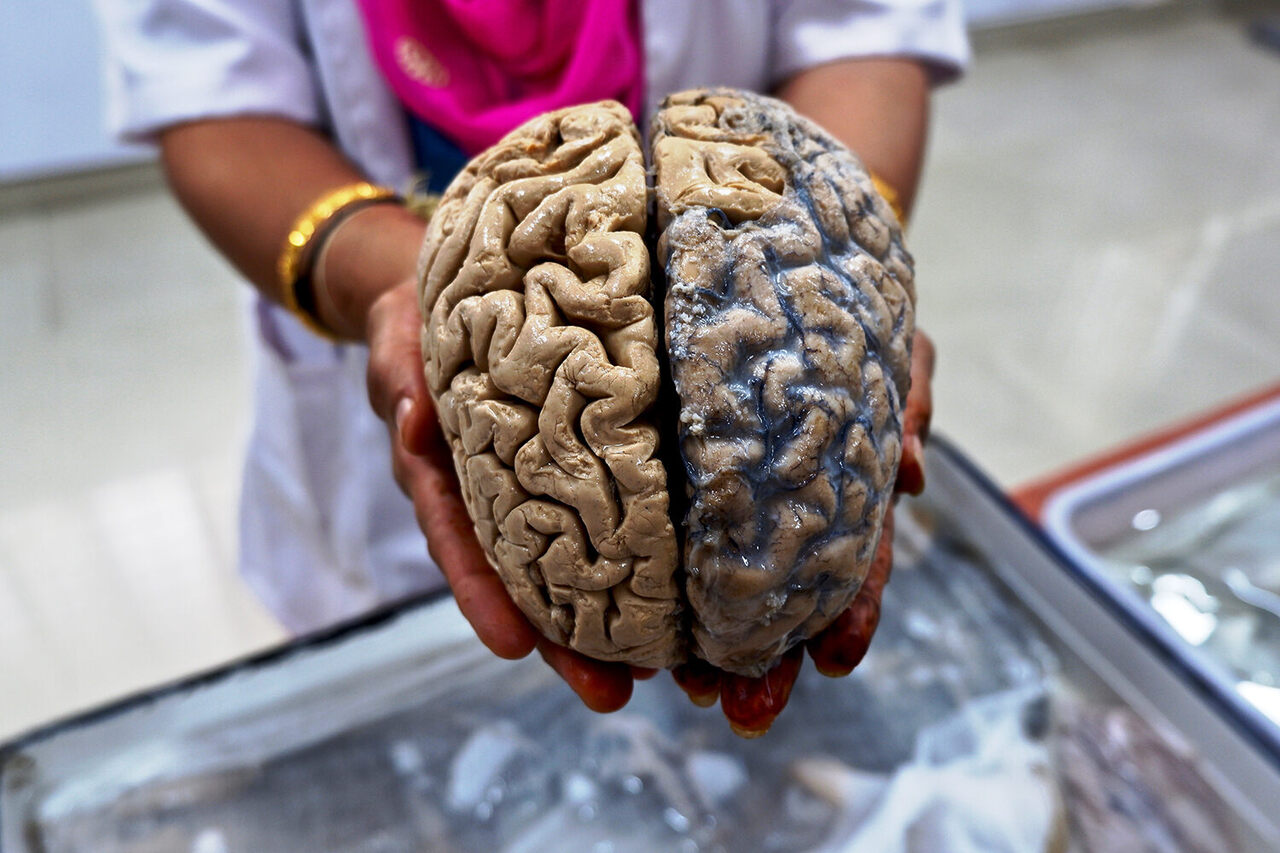
Art comes in various forms...and, with that, many people seek out its beauty through art exhibits, religion, or even self-expression. But, what many individuals fail to recognize, is that our very own human beings contain some of the most complex, yet mesmerizing art of all. Where does that lie? The human brain.

Image result for human brain
The Human Brain!!
Nowadays, there are many variations in technology in order to locate and further understand the functions of the brain. From brain scans, to simply memorization tasks, scientists continue to deepen their knowledge surrounding the aspects of a brain. Not only has neuroscience taught individuals much about neural pathways, mental illnesses, and various diseases, but it has all led to one of the most important discoveries among the top: the uniqueness of every individual. 
Image result for neuroscience
Neuroscience

As I watched the Ted Talk with Christopher deCharms, I found it intriguing how the audience was literally able to see the brain's activity through various colors and movements that were projected. When viewing this video, I felt as though I was a witness to art being created. As a different movement was conducted, or even a different thought took place, the image of the brain and the varying colors/shapes associated with it began to alter. It changes from individual to individual and for every circumstance. But, the uniqueness of the brain and the ability for every brain to change - illustrates how every person is able to develop their own artwork through the simple workings of their brain. 

All people have their own identity, own preferences and personal decisions. This is art itself. But, it IS the art created by every individual person. And, this form of 'art' is only discovered through the process of neuroscience. So, through this development, people, but even more specifically, the scientists, are able to serve as witnesses to the pieces of individualistic art produced by every human being. This correlation not only increases the engagement with this form of material, but also has the opportunity to encourage ordinary individuals into uncovering their own uniqueness of their brain through their personality and identity. 
Image result for personal identity
What makes you, YOU?!


Resources

Nordqvist, Christian. “Neuroscience: Overview, History, Major Branches.” Medical News Today,
          MediLexicon International, 26 June 2018.

“Personal Identity: Who Are You? What Am I?” A Philosopher's Take, 9 Aug. 2017. 

Prabhu, Maya. “Visitors Can Touch Human Brains at This Indian Neuroscience Institute.” Atlas
          Obscura, Atlas Obscura, 9 Jan. 2019.

“The Interplay between Neuroscience and Art.” Organization for Human Brain Mapping.

“What Has Neuroscience Ever Done for Us?” What Has Neuroscience Ever Done for Us? | The   
          Psychologist.


Monday, May 13, 2019

Event 2: LA Botanical Gardens

Event 2: UCLA'S BOTANICAL GARDENS

Tropical American Birds!!
On May 4, 2019 I attended UCLA's Botanical Gardens for Bird LA Day. To be quite honest, I did not know that these gardens even existed for the longest time! My sister told me how she loved to sit in the peace and quiet in order to complete some homework, so I decided it was finally time to check it out! When I arrived at the gardens, I received a "Bird LA Passport" which contained pictures of many of the birds that were available to view throughout the self-guided tour, along with many of their common sounds. I was shocked to see that the gardens were so vast and long that I was unable to visit all of the birds that appeared on the brochure. However, my favorite bird must have been the Toco Toucan that is found in Central and eastern South America. I think that this bird is funny because it snores and grunts - how weird!!


Me with the largest body of water in the gardens
The Tallest Tree
Throughout the day at the Botanical Gardens, I also decided to tag along on a tour with an official guide, which was separate from the Bird LA self-guided tour. As we made our way through the gardens, we came across the largest and oldest tree! It was so tall that I could hardly capture the entire tree in one picture. I found it interesting when my tour guide explained how the goal of the Botanical Gardens was to eventually become completely self-sufficient in irrigation. As of now, the gardens utilize 'self-timer' sprinklers that only go off during the nighttime so that the visits from the tourists are uninterrupted. The tour guide was further explaining that by becoming 100% self-sufficient in irrigation, it will help conserve water for the rest of the environment, and maybe even increase funds for the gardens as there will be less money towards irrigation.

Me at the Botanical Gardens
Overall, my visit to UCLA's Botanical Gardens on Bird LA Day was extremely interesting and peaceful. I had no idea that these gardens contained various different climates so that all of the unique plants and animals could survive in their given environment. I was also clueless to the fact that these gardens are over 90 years old! This was a very special experience, as I now have a newly found respect for gardens throughout the world, and the constant efforts it takes to maintain their health. With that, I am also lucky enough to have found a peaceful environment where I will be able to unwind from the crazy college days, and respect the beauty that is provided through 'nature'.


References

“Campus Plants List.” Mildred E. Mathias Botanical Garden.

“Game Music in the Garden: Outdoor Concert with UCLA's Game Music Ensemble.” Mildred E. 
         Mathias Botanical Garden.

“Mildred E. Mathias Botanical Garden.” Venue Reservations.

“Mildred E. Mathias Botanical Garden.” Wikipedia, Wikimedia Foundation, 2 Mar. 2018.

“Toco Toucan.” Wikipedia, Wikimedia Foundation, 24 Apr. 2019. 


Wednesday, May 8, 2019

Unit 6: BioTech + Art

BioTech + Art

BioArt acts as a perfect combination of practical and expressive. Not only does BioArt with Technology serve as logical technology that has the ability to improve human life, but it also offers a visual for intertwining two completely different areas of life to become one successful unit. Specifically, when I think of BioArt, I am actually reminded of Week 1 - Two Cultures. During Week 1, C.P. Snow discusses the distinction between science and humanities. Many questions arouse around whether these two distinctly different arenas could coexist, and if so, to what extent? How?

Image result for science and humanities
Science and Humanities Collaborating
So, later in this class, the Chapter of BioTech + Art become the topic of the week. This reminded me of a very prominent form of BioTech in our culture today: prosthetics. So, it became evident to me that further down the road - after schooling has concluded - people were suddenly able to intertwine the two very different cultures of science and humanities in order to create a product that assists individuals in living a more successful and peaceful lifestyle.

Can you hear me now? (Credit: Yetisen et al. Trends Biotech 2016)
Stelarc & the implanting of an ear
Furthermore, there are other areas of life that this cohabitation of different lifestyles have become prominent. Maybe perhaps in museums or art exhibits. However, when I was researching BioArt, I came across someone by the name of Stelarc. This man craves much human attention, and has pierced his body in unimaginable ways to simply raise eyebrows. But, for his next 'stunt' to exhibit his BioArt 'side,' he decided to surgically implant an ear onto his forearm. Stelarc discusses how he did not implant this 'ear' on his arm to improve his own personal hearing. But, with this surgical placement of another ear, other people from all over the world that are connected to this microphone are actually able to hear and interpret the sounds occurring around Stelarc at all times. Although this is an extreme case of BioArt, it IS indeed an example of BioArt. This person, although very weird, demonstrates the cross and cohabitation of these two unlike cultures of Bioscience and art. 

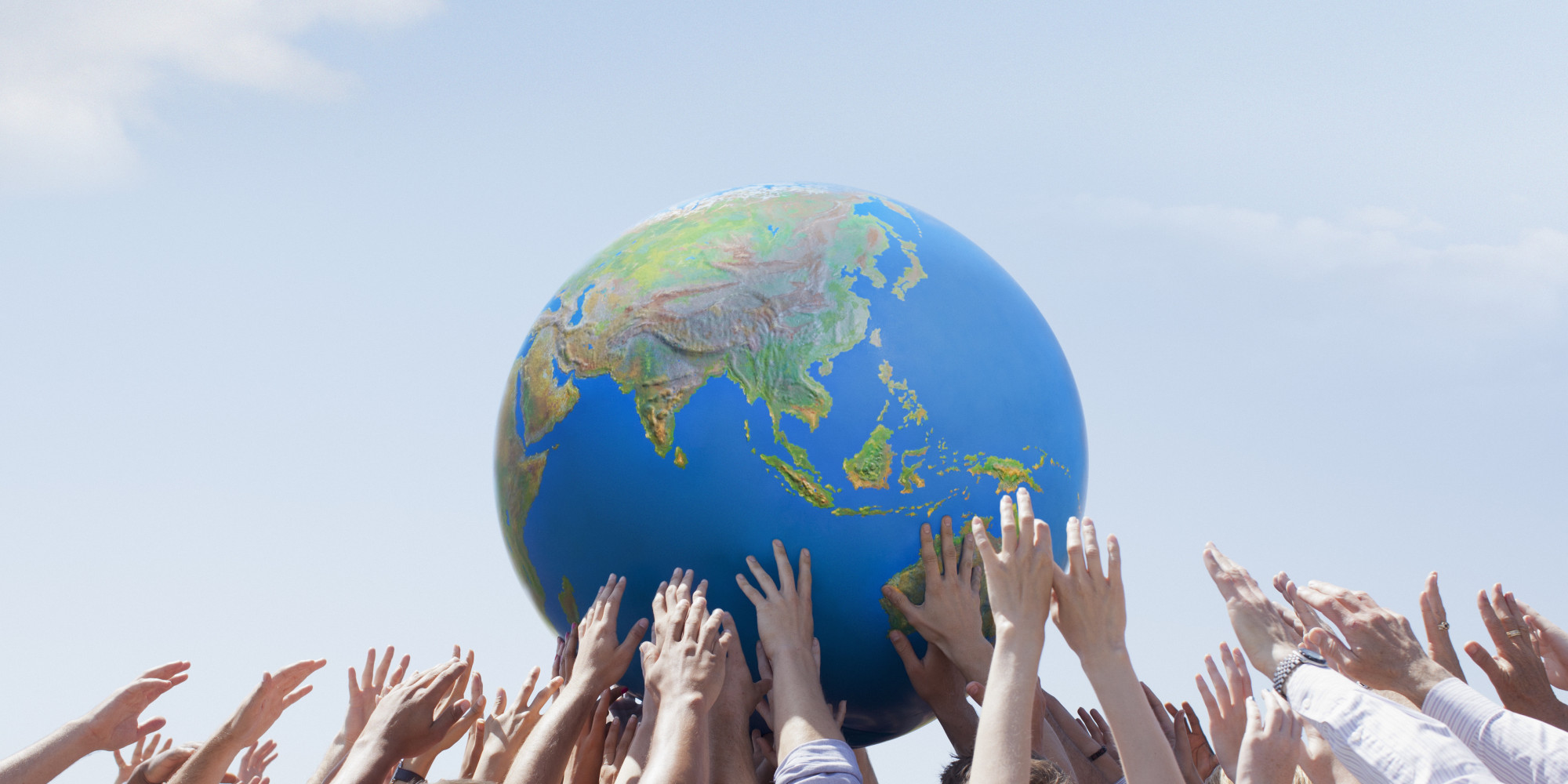
Related image
World Working Together
The fact is, is that Snow discussed the major divisions amongst society throughout Week 1. But, through the use of BioTech + Art, it is proven that very different societies actually have the opportunity to coexist in a very successful manner. It just depends upon the approach from every individual and the way in which people decide to look at life...a life of single individuals or a life full of acceptance and collaboration. 

References

CommForum. “Ultimate Truths: Comparing Science and the Humanities.” The Communications 
          Forum at the Massachusetts Institute of Technology, The Communications Forum at the 
         Massachusetts Institute of Technology, 2 Sept. 2016.

Feedstuffs. “Globalization Having Little Effect on Food Choices.” IGCAT, 11 Apr. 2017.

Haridy, Rich. “Art in the Age of Ones and Zeros: BioArt.” New Atlas - New Technology & Science   
          News, New Atlas, 17 Mar. 2017.

Villariba, Mannet. “The Body Is Obsolete - Stelarc.” YouTube, YouTube, 10 Jan. 2013.

Willis, Martin, et al. “Humanities and Science Collaboration Isn't Well Understood, but Letting off 
          STEAM Is Not the Answer.” The Conversation, 19 Sept. 2018


Tuesday, May 7, 2019

Midterm Project

https://drive.google.com/file/d/16BlJjd3i4V0P8VrUlnylo_6H5d2VuugH/view?usp=sharing